

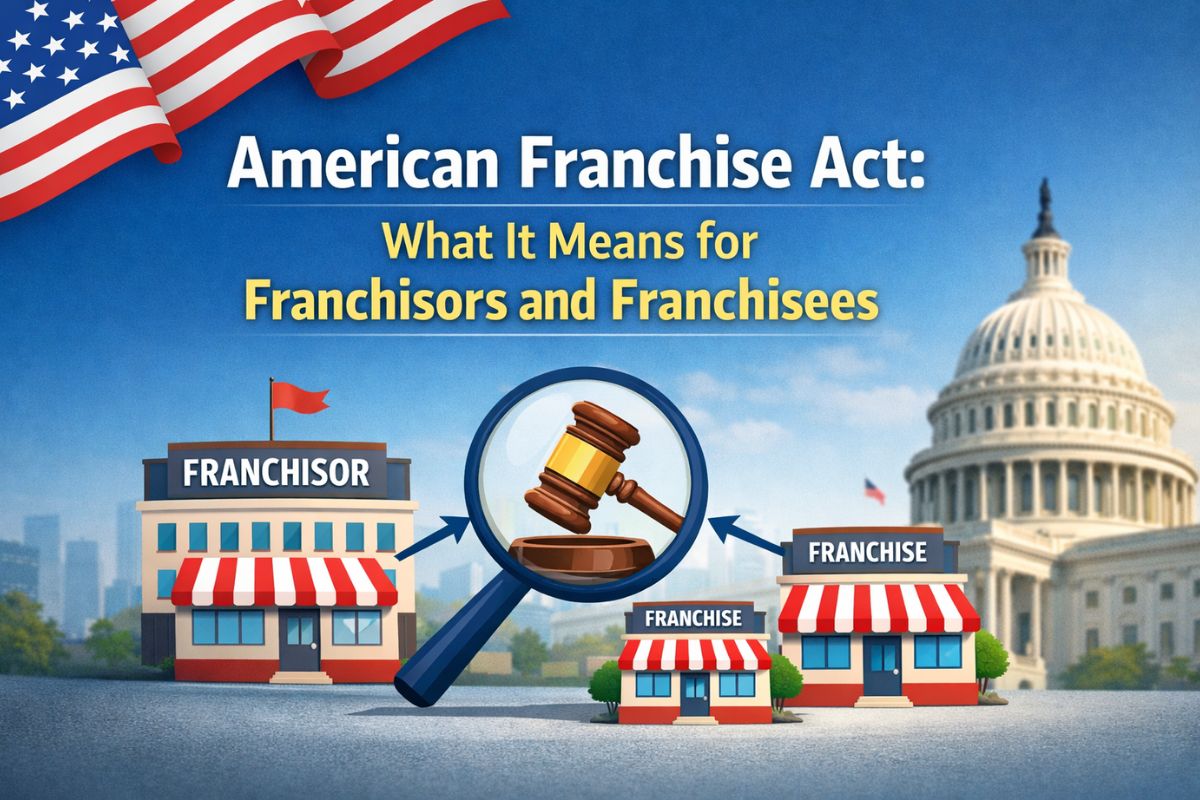
FRANCHISE NEWS-: The American Franchise Act is a deal for companies that have franchise businesses. These companies have had a time figuring out the American Franchise Act and what it means for them. The American Franchise Act is trying to make things clearer about when the main company and the franchise owner can be held responsible, for breaking employment laws. The American Franchise Act is a proposed bill that wants to help companies understand the American Franchise Act better.
If the AFA becomes a law it will really change how we decide who is an employer according to the labor law in the United States. This will have an impact, on the AFA and how companies manage risks and follow the rules especially for the AFA and businesses that are part of a franchise. The AFA will affect the way the AFA operates and how the AFA deals with labor laws.
Under Current the National Labor Relations.
The National Labor Relations Act is a law that says a company can be considered an employer if it has any control, over the employees of another company. The National Labor Relations Act has a lot of rules. This one is pretty controversial especially when it comes to companies that have franchises.
Franchisors always make sure that the people who run their businesses follow the rules. They want everything to be the same so that people know what to expect from their brand.. Sometimes these rules can affect the people who work for them. When that happens the franchisors might get in trouble with the law. The rules that franchisors make can sometimes overlap with decisions, about who to hire or fire. That is when the legal problems can start for the franchisors.
Key issue:
How much control is too much?
If a franchisor exercises direct and immediate control over essential employment terms, it may be held liable for unfair labor practices committed by a franchisee—creating uncertainty across the industry.
Congressional Intent: Preserving the Franchise Model
In September 2025, a bipartisan group of U.S. House Representatives introduced the American Franchise Act (H.R. 5267). The bill launched with 14 co-sponsors and has since expanded to 70 lawmakers, signaling growing political support.
Why the AFA Was Introduced
Lawmakers say the bill is intended to “preserve the franchise business model” by:
- Allowing franchisors to enforce brand, quality, and marketing standards
- Recognizing franchisees as independent business owners
- Preventing routine brand oversight from triggering employer liability
To accomplish this, the AFA proposes adding Section 20 to the NLRA, titled “Clarification of Joint Employment for Franchising.”
A Narrower Joint Employer Test Under the AFA
Under the proposed law, a franchisor would only be considered a joint employer if it both:
- Exercises substantial direct and immediate control
over one or more essential terms and conditions of employment.
What “Substantial Direct and Immediate Control” Means
The AFA defines this as control that has a regular or continuous effect on employment terms. Importantly, it excludes actions that are:
- Sporadic
- Isolated
- De minimis (minor or incidental)
In short, occasional involvement would not be enough—only sustained, hands-on control would trigger liability.
What Counts as Direct and Immediate Control?
The AFA provides specific examples to clarify where the line is drawn.
Essential Employment Terms That May Trigger Liability
A franchisor would be considered to have direct control if it actually determines:
- Wages – Setting pay for individual franchisee employees
- Benefits – Selecting benefit plans or benefit levels
- Hours of Work – Assigning schedules or overtime
- Hiring – Deciding who is hired
- Discipline or Discharge – Determining who is fired or how discipline is imposed
- Supervision – Regularly instructing employees or issuing appraisals
- Direction – Assigning tasks, roles, or work schedules
What Does Not Count
The bill explicitly excludes common franchisor practices, such as:
- Setting operating hours
- Requiring minimum staffing levels
- Establishing hiring standards
- Providing training materials or performance guidelines
- Communicating concerns about misconduct or poor performance
- Defining what work must be done without dictating how it is done
These exclusions are designed to protect traditional franchising practices from unintended liability.
What Happens Next?
The AFA is currently under review by the House Committee on Education and Workforce. While its legislative future remains uncertain, industry stakeholders are closely watching its progress.
Franchise companies are advised to:
- Monitor legislative developments closely
- Review franchise agreements and operating manuals
- Align HR and compliance practices with potential new standards
News in Brief
- The American Franchise Act aims to narrow joint employer liability in franchising.
- Only substantial, ongoing, and direct control over employment terms would trigger liability.
- Routine brand standards and training would not create joint employer status.
- HR and legal teams should prepare for potential changes to NLRA enforcement.
Also Read: Zaxbys Reaches 1000 Stores, Sets Aggressive Expansion Plans for 2026

