

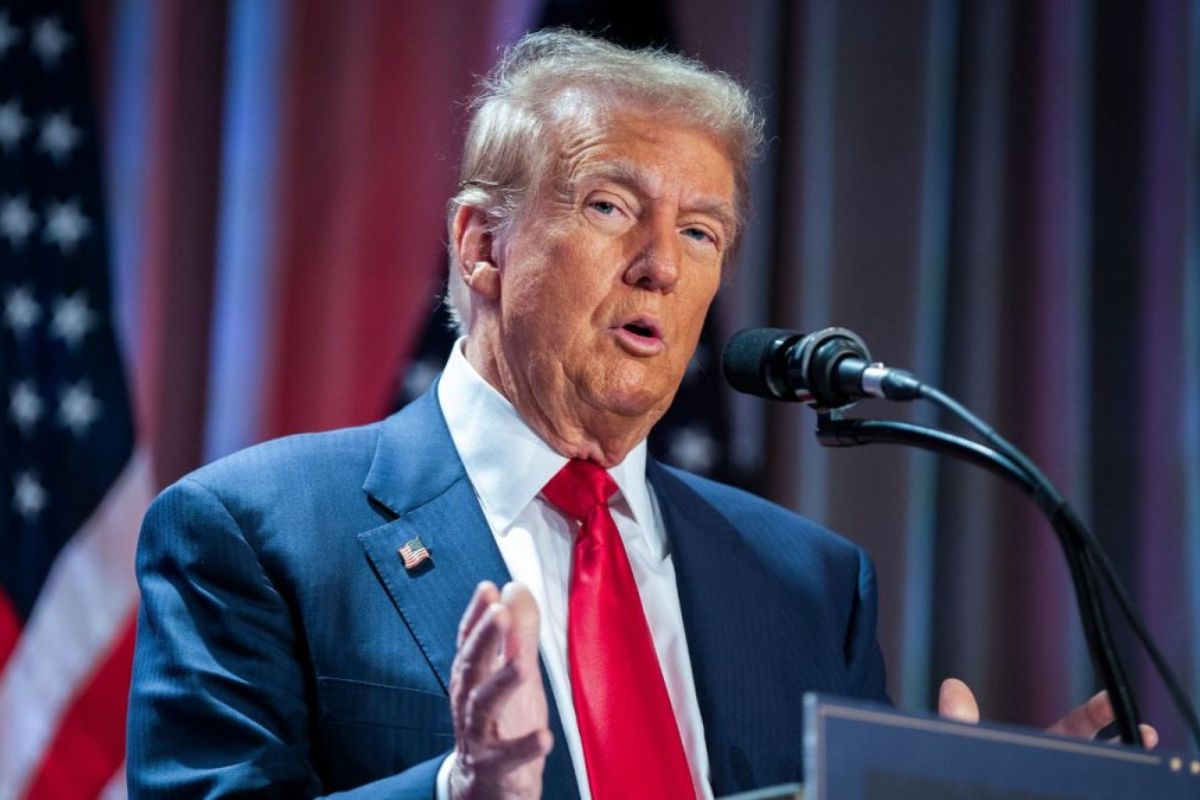
Chinese Carmakers US Entry: President Donald Trump has unsettled America’s auto sector after saying he would “love” to see Chinese carmakers build factories in the United States, creating local jobs and hiring American workers.
Speaking during a visit to Detroit, Trump’s remarks — alongside signals from Geely that it could enter the US market within three years — have heightened anxiety among US auto executives. Industry leaders fear the intense competition seen in Europe, south-east Asia and Latin America could soon reach American shores.
“Assuming the Chinese are given the opportunity to come into the US, they will bring a very competitive model,” said David Dauch, chief executive of Dauch Corp. “If there is a level playing field, that’s fantastic. If not, I don’t think the US will allow China in this market to impact jobs here.”
Industry on Edge
Executives remain cautious ahead of Trump’s planned April visit to China, where a trade deal could potentially be discussed. The possibility of a policy shift has sparked a wave of strategic reassessments within Detroit.
Tu Le, founder of Sino Auto Insights, said North American manufacturers have been seeking advice on whether to defend against Chinese competition or partner with it.
“They’re trying to figure out whether to resist the wave or ride it,” one consultant noted. “Either way, standing still isn’t an option.”
Mark Wakefield of AlixPartners said US carmakers are “quite paranoid and concerned” about the speed and efficiency of Chinese vehicle development. Companies are studying how Chinese rivals bring products to market quickly and at lower cost.
Tariffs Still in Place
Despite Trump’s comments, significant barriers remain. The US imposed 100% tariffs on Chinese electric vehicles in 2024 under former President Joe Biden, and those tariffs remain in effect. Restrictions on Chinese automotive software and hardware also continue.
Navtej Dhillon, who helped develop the tariff plan, said the rationale for the measures “still holds” and remains supported by US manufacturers.
However, some Detroit leaders privately worry that cutting off access to Chinese technology and manufacturing expertise could leave American firms at a disadvantage globally.
Partnerships Outside the US
For now, collaboration appears more likely outside the United States.
Stellantis acquired a 20% stake in Leapmotor in 2023 to help the Chinese EV start-up expand in Europe. Meanwhile, Ford Motor Company is reportedly in discussions with Geely about potential cooperation in Europe, including shared production capacity and platforms.
Ford has also explored talks with BYD and Xiaomi, though some discussions have been denied.
“Executives would be neglecting their duties if they weren’t talking to companies like Xiaomi,” Le said, citing the “imminent nature of the threat.”
Canada and Mexico in Focus
Analysts say a more immediate priority for Chinese automakers may be Canada. In January, Canada agreed to accept 49,000 Chinese EV imports at a 6.1% tariff, replacing its previous 100% rate.
Jiří Opletal, chief executive of China EV Marketplace, warned: “Once access exists, it becomes much harder to reverse entirely. In other words, the floodgates are about to be opened.”
If Chinese manufacturers establish production in Canada or Mexico, US automakers could face intensified competition across North America.
“We will literally be surrounded by Chinese vehicles in Canada and Mexico,” Le said, adding that the US may soon compete with its neighbours for Chinese foreign direct investment.
A Shifting Competitive Landscape
Geely, which also owns Volvo Cars and Polestar, has suggested that entering the US market is a matter of “when and where.” It could potentially utilise Volvo’s South Carolina facility.
Volvo Cars chief Håkan Samuelsson indicated openness to cooperation on vehicle assembly if capacity allows but cautioned against sharing software systems.
“If we’re going to have a strong car industry in the US, it would be good if new technology and new competitors entered the market,”
Still, industry observers note a structural vulnerability: a “gaping hole” in the lower-priced vehicle segment as US automakers shifted toward higher-margin SUVs and trucks.
“If Chinese automakers show up tomorrow, they will serve that need before any other automaker can respond,” one analyst warned.
News in Brief
- Donald Trump signalled openness to Chinese carmakers building US factories.
- US auto executives fear intense competition from low-cost Chinese EV makers.
- 100% tariffs on Chinese EV imports remain in place.
- US companies are exploring partnerships with Chinese firms abroad.
- Canada’s reduced tariffs may create a backdoor entry point into North America.
Also Raed: Warner Bros Discovery Takeover Battle Paramount and Netflix Compete in $108 Billion Bidding War
Also Read: AI Safety Concerns Rise as Researchers Warn Profit Is Overtaking Responsible Development

