

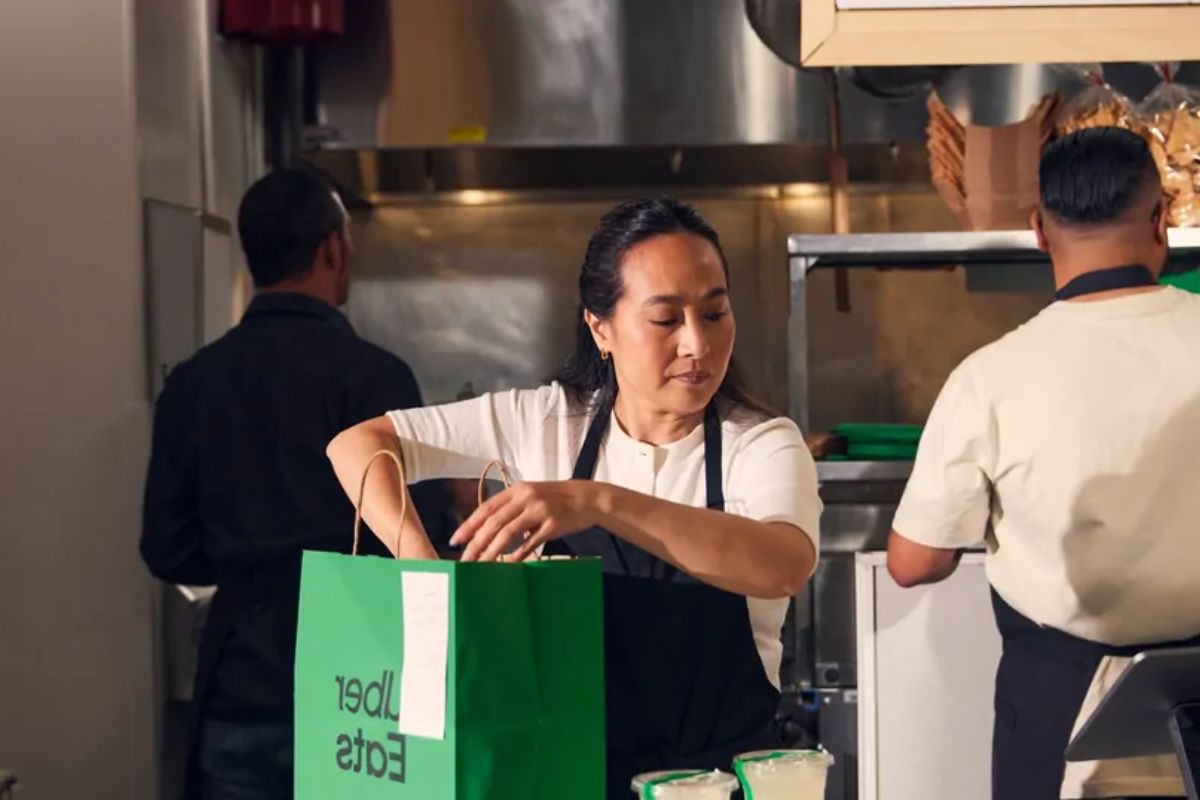
Uber Eats Returns to Romania: Uber Eats is getting ready to go to Romania in 2026. This is a deal because it is coming back six years after it left. Uber Eats wants to get bigger in Europe. It is going to start doing business in seven countries. These countries are the Czech Republic, Greece, Austria, Denmark, Finland, Norway and Romania. Uber Eats is really trying to make a comeback in Europe. The company Uber Eats is going to launch its services in all these places as part of its plan to expand in Europe. Uber Eats is focusing on Europe. That is why it is going back, to Romania.
The US-based delivery giant is reportedly targeting an additional $1 billion in revenue over the next three years through this regional push, according to reports from the Financial Times. By re-establishing its presence in Romania, Uber Eats is signaling renewed confidence in the country’s fast-evolving food delivery sector and growing consumer demand for app-based convenience.
Strategic Expansion and Competitive Positioning in Europe
The expansion comes at a time when global food delivery companies are intensifying competition across Europe. Earlier this week, parent company Uber strengthened its footprint in Turkey by acquiring the delivery division of Turkish firm Getir, a move aimed at scaling operations and improving service efficiency.
Susan Anderson, Uber’s global head of deliveries, emphasized that the company’s goal is to elevate standards in the category by delivering better value to both users and merchant partners. This reflects a broader industry trend where delivery platforms are focusing not just on growth, but also on profitability and operational optimization in competitive markets.
Localized Approach for the Romanian Market
Uber Eats plans to tailor its app specifically for Romanian users, incorporating local language support, widely used payment methods, and merchant-focused tools such as data analytics and marketing support. The company says these features will help restaurant partners improve visibility and streamline operations.
Courtney Tims, regional general manager for Western and Southern Europe at Uber Eats, noted that the company is “very pleased” to expand into Romania, highlighting the country’s growing digital economy and increasing adoption of on-demand services.
A Return to a More Competitive Landscape
Uber Eats started in Bucharest in 2018.. It left Romania in 2020. The reason was to focus on places where Uber Eats was doing better. They looked at how the business was doing. Made this decision.
Since then a lot of things have changed with food delivery in Romania. Now companies like Wolt, Glovo and Bolt Food are really popular. They are the names, in food delivery now. Uber Eats is not there anymore. These other companies are doing well.
Today Uber is already providing ride sharing services in 36 cities in Romania. They have also started a local delivery service, in all the places where they are active. The fact that Uber is making money in Romania and their business is doing well over the past few years means they have a better chance of succeeding with food delivery this time around.
With operations spanning more than 70 countries and over 10,000 cities globally, Uber Eats’ return could significantly reshape Romania’s competitive delivery market.
News in Brief: Uber Eats Returns to Romania
Uber Eats plans to re-enter Romania in 2026, six years after exiting the market, as part of a broader European expansion across seven countries, including the Czech Republic, Greece, and Austria. The move aims to boost regional revenue and strengthen its competitive position against rivals like Wolt, Glovo, and Bolt Food. Backed by its parent Uber, the company will localize its app with Romanian language support, local payments, and merchant tools. With Romania’s growing digital economy and rising demand for delivery services, Uber Eats hopes its strong ride-sharing presence will help it succeed in a more competitive market.
Do you think Uber Eats can successfully challenge Wolt, Glovo, and Bolt in Romania this time? Share your thoughts in the comments below.
ALSO READ: Chinese Carmakers US Entry: Trump Signals Openness, Detroit Auto Industry Raises Alarm

