

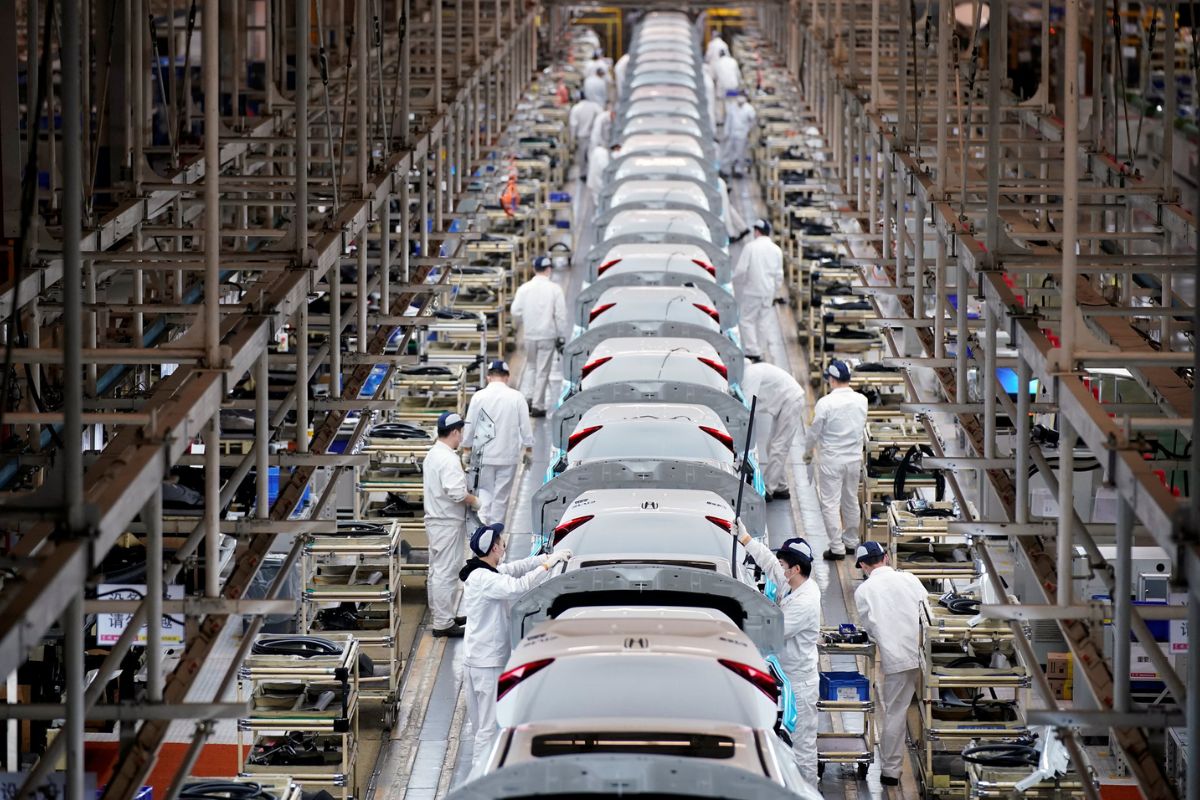
China’s Factories Slow in January: China’s factories cooled a bit in January, but they didn’t grind to a halt. Official data released Saturday showed that overall manufacturing activity dipped, even as factory output continued to grow. The country’s manufacturing PMI fell to 49.3, slipping below the 50 line that separates growth from contraction.
The slowdown wasn’t a shock. Some factories entered a normal seasonal break, and demand from buyers stayed weak. New orders fell to 49.2, showing that fewer customers were placing fresh orders. Still, production itself held up well. The output index stayed in growth territory at 50.6, suggesting factories are still turning out goods even as demand lags behind.
High-Tech Shines While Traditional Sectors Struggle
The data also showed a clear split inside China’s manufacturing sector. High-tech industries continued to perform well, standing out as one of the strongest areas of growth. The PMI for high-tech manufacturing rose to 52.0, marking a second straight month of solid expansion. Equipment manufacturing also stayed above 50, signaling steady progress.
Also read: Ford’s Garage Opens New Franchise Restaurant in Sanford, Florida
At the same time, some traditional industries faced pressure. Sectors like oil, coal, fuel processing, and automobiles all slipped below the growth line, pointing to softer demand and slower production. Meanwhile, food processing, railways, shipbuilding, and aerospace posted strong numbers, with both production and new orders showing healthy growth.
Big companies helped keep the overall picture stable. Large manufacturers stayed in expansion at 50.3, while medium-sized and smaller firms continued to struggle, highlighting the uneven recovery across the economy.
Prices Rise and Confidence Holds as China Looks Ahead
Another encouraging sign came from prices. Both input costs and factory-gate prices rose in January, driven by higher commodity prices. For the first time in nearly 20 months, factory-gate prices climbed back above 50, suggesting that manufacturers are finally seeing some relief after a long period of pricing pressure.
Business confidence also remained strong. Companies’ expectations for future production stayed in expansion territory, showing that many firms believe conditions will improve. This optimism follows earlier data showing China’s economy grew 5% in 2025, hitting its official target despite global uncertainty.
The government is trying to fix some problems like people not buying things. So they came up with ideas to get people to spend money and to get companies to invest. They also said they have a plan that will take a years until 2030 to get more people, in the country to buy things. This plan is going to focus on ideas and technology to help the country grow in the future. The government wants to use innovation and new technology to drive growth of domestic demand.
What do you think? Is China’s manufacturing slowdown just a temporary pause, or a sign of deeper problems ahead? Share your thoughts in the comments.
Read More : How Daymond John Turned FUBU Into a Billion-Dollar Brand lastest News.

