

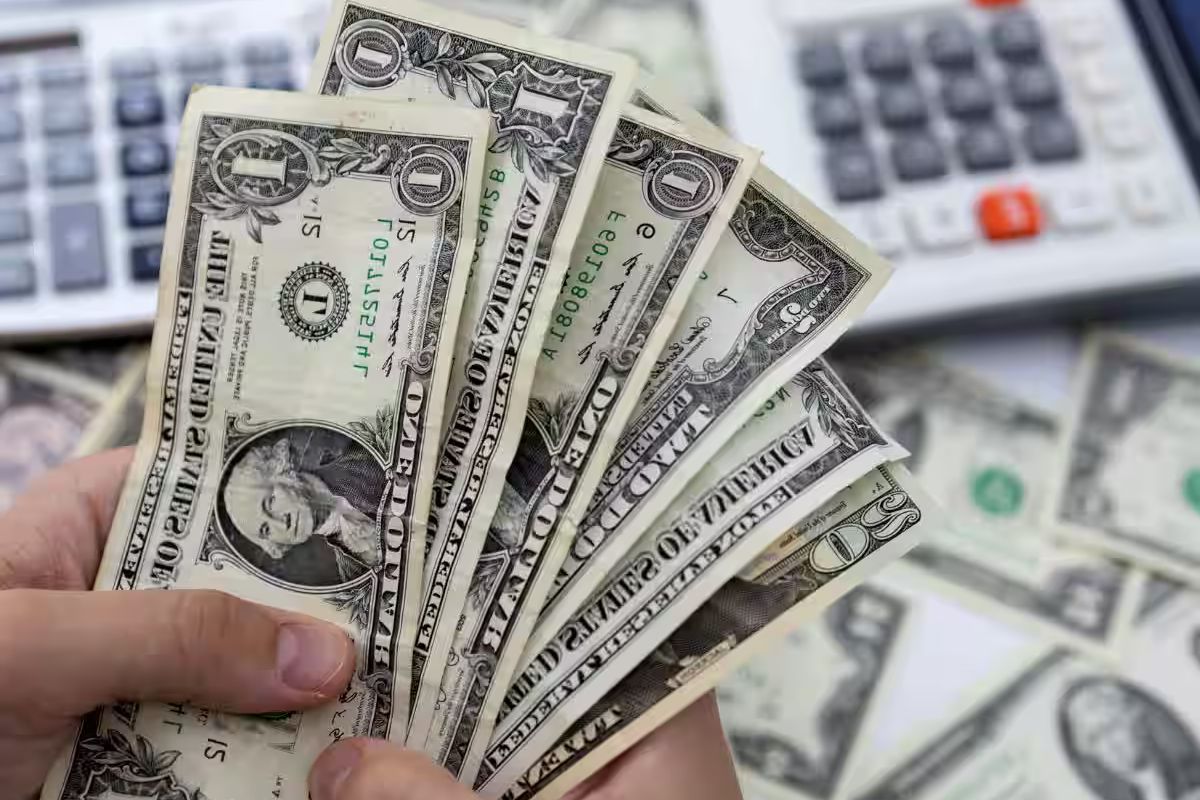
China Quietly Shifts Away From the U.S. Dollar: The U.S. dollar slipped slightly early Monday after a report revealed that Chinese officials quietly warned domestic banks to reduce how much U.S. currency they hold. While the move may sound alarming at first, experts say it does not mean China is suddenly turning its back on the United States. Instead, it signals something more subtle but important: growing caution about relying too heavily on the dollar.
According to Reports, Chinese regulators verbally advised banks to limit their exposure to U.S. dollars. The guidance was not a formal rule and did not apply to China’s official government reserves, including its holdings of U.S. Treasury bonds. Still, some banks have already started cutting back.
As of September, Chinese banks held about $298 billion in dollar-based bonds, according to China’s State Administration of Foreign Exchange. Even a small reduction in those holdings can ripple through global currency markets, especially at a time when the dollar is already under pressure.
Why China Is Asking Banks to Be Careful
At its core, China’s move appears to be about risk management, not panic. Officials are not saying the U.S. government will fail to pay its debts. Instead, they seem concerned about having too much money tied to one country’s policies.
For many years, U.S. Treasuries and the dollar were considered the safest place in the world to park money. They were seen as stable, predictable, and reliable. That is why countries like China bought and held so many dollar-based assets.
But times are changing. China’s official holdings of U.S. Treasuries have been declining for more than a decade. Today, China holds about $683 billion in U.S. government debt, down sharply from its peak in 2013 and the lowest level since 2008. China is no longer the largest foreign holder of U.S. debt, having fallen behind Japan and the United Kingdom.
What makes this moment stand out is not the size of the holdings, but the message. Chinese officials have rarely, if ever, advised domestic banks to cut back on dollar exposure, even quietly. That alone has caught the attention of global investors.
The Dollar’s Image Is Slowly Changing
For decades, the U.S. dollar has been treated as the world’s default “safe” currency. When things went wrong elsewhere, investors ran toward the dollar. Now, some countries are beginning to ask whether that assumption still holds.
Several factors may be shaping this shift in thinking. President Donald Trump has openly supported a weaker dollar, believing it helps U.S. exports. He has also made comments that raised concerns about the independence of the Federal Reserve, the central bank that manages U.S. monetary policy.
On top of that, frequent tariff threats, trade disputes, and sudden policy changes can cause big swings in currency values. Even if none of these issues alone is decisive, together they can make holding large amounts of dollar-based assets feel less comfortable.
China may not be saying this out loud, but markets are reading between the lines. When a major global player starts diversifying away from the dollar, even quietly, it can affect how other investors think and act.
What This Means for Global Markets
The dollar was already having a time before this news came out. When investors find out that Chinese banks are reducing their involvement with the dollar it makes things even harder for the dollar. The people who buy and sell currencies are really sensitive to what they think is going on and tiny changes in what people do can cause big changes, in the dollar. The dollar is the one that gets affected by this.
The dollar is not going to stop being the worlds currency right away. The United States still has good financial markets, very strong institutions and lots of money moving around. However people are now wondering if the dollar is really completely safe and this is something that is being talked about more and more.
When we look at what’s happening in global markets people are not really freaking out. Instead they are trying to make sure their money is spread out in a way. This means countries and banks are putting their money into currencies and assets so they do not have too much money in just one place. Global markets are, about finding a good balance and that is what is happening right now with global markets.
The warning to Chinese banks may be informal, but its message is clear: relying too much on any single currency carries risks.
Do you think the U.S. dollar will remain the world’s safest currency, or is its grip slowly loosening? Share your thoughts in the comments below.
Read More : Amazon Stock Slides Despite Strong Results as Investors Fear Its Biggest Bet Yet
Read More : Apollo Nears $3.4 Billion Loan Deal to Finance Nvidia Chips for Musk’s xAI

